
Product
Agah Mobile App
Company
Fabric
Vertical
Digital Media
Stage
Early Growth
Type
Consumer Media
Objective
Solution Experience Design
Practice
Research / Design / Application
Delivery
Strategy / Framework / UX
Role
UX Researcher and Designer
Timeline
~ 6 M
Location
Baku, Azerbaijan / Remote
Relation
Contract
Understanding the Cluttered Flow of Consumption
Digital media consumption across regional platforms remains severely fragmented, forcing users to navigate dozens of independent news portals with inconsistent schemas, erratic updates, and redundant interfaces. This initiative explores the design of a unified news aggregation ecosystem engineered to consolidate high-density external updates into a singular, highly efficient reader experience. The primary goal focuses on eliminating systemic reading friction through intelligent content ingestion and adaptive layout structures.
By separating backend data storage lifecycles from front-end visual rendering, the project establishes a scalable, predictable framework for multi-source content ingestion. The design narrative focuses on strategic UX architecture, balancing tight database constraints with refined client interactions to create a seamless, goal-oriented news environment. Every structural decision serves to elevate information scannability, guarantee system responsiveness, and maintain total visual clarity across dynamic devices.
Framing Problem Space and User Friction
Integrating third-party RSS infrastructure introduces complex technical and experiential hurdles. Disparate media outlets deploy unstandardized metadata formats, unpredictable release schedules, and chaotic tagging hierarchies. Without a robust intake architecture, these irregularities lead to missing article attributes, duplicate entries, broken visual cards, and fractured feed layouts that degrade scannability, frustrate power readers, and erode long-term platform trust.
Furthermore, balancing server-side database storage capacity against real-time content delivery creates severe operational tradeoffs. Storing full article payloads locally leads to rapid database bloat, performance latency, and stale information, whereas aggressive server polling drains mobile battery and network resources. Designing a viable solution required resolving these underlying infrastructure bottlenecks without compromising initial load speeds or interaction fluidity.
Decoupling Intake Logic and Storage Lifecycles
Overcoming external RSS limitations required decoupling content intake, storage lifecycle rules, and client-side rendering into isolated, specialized processing pipelines. By treating immutable canonical article URLs as unique primary database keys, the ingestion engine prevents duplicate records while maintaining lightweight pointers to original publisher assets. This structural separation protects client hardware while preserving complete content fidelity across regional channels.
Strategic Ingestion and Asset Extraction
The intake pipeline systematically polls external endpoints to extract raw publisher tags, article titles, and canonical web addresses, using immutable links as non-duplicating database keys. Internal storage operates on a rolling seven-day retention lifecycle, automatically purging legacy records once capacity thresholds are crossed. Client devices fetch indexed URL pointers and leverage real-time content readers to render live hero assets dynamically.
Real-Time Web View Asset Delegation
To optimize performance, the system balances server storage against real-time web extraction. Instead of caching full HTML payloads, internal tables store minimal metadata while delegating article body parsing to a real-time web view engine upon user selection. This hybrid approach drastically reduces database footprint while ensuring that readers always access the most current version of live news items directly from source servers.

Uncovering Structural Constraints and Behavior
Analyzing publisher publishing patterns revealed that external metadata cannot be reliably auto-mapped without strict structural guardrails. Inconsistent tagging schemes require fallback pathways to prevent content drops, while background application refresh habits dictate how feed updates should be communicated. Identifying these operational realities enabled the formulation of targeted architectural rules to preserve content hierarchy and reading continuity.
Fallback Taxonomy Routing Mechanisms
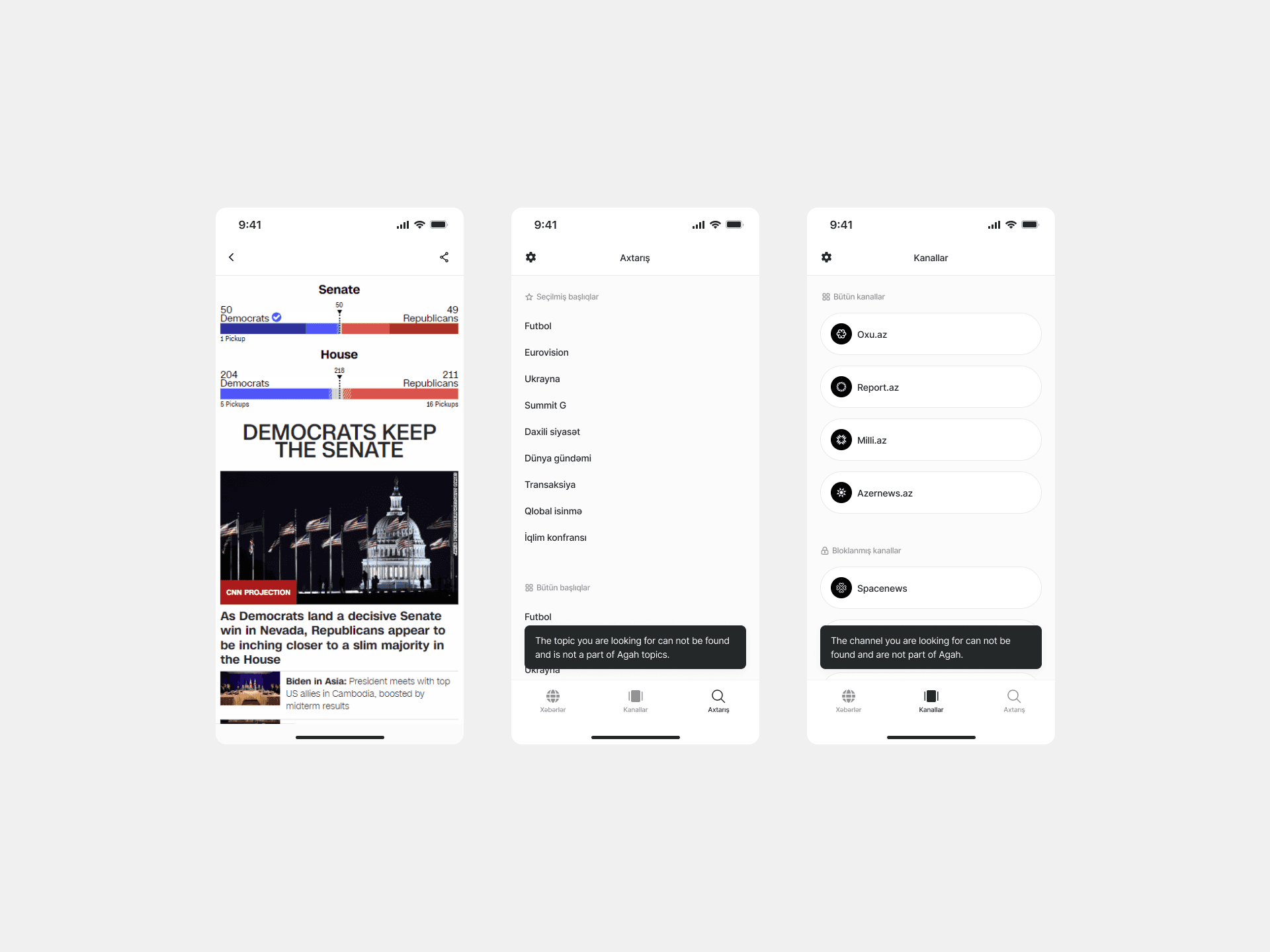
Publisher tags vary wildly across outlets, making automated server-side classification prone to misassignment or orphaned entries. Mapping flows require manual taxonomy alignment for high-tier categories, paired with isolated fallback catch-all buckets for unlisted tags. This structural safeguard prevents unmapped publisher metadata from corrupting core navigation flows or obscuring freshly published articles from active user feeds.
Non-Explicit Background Refresh Logic
Observing reader behavior highlighted clear distinctions between explicit refresh actions and automatic background launches. Forcing manual pull-to-refresh gestures during passive session restarts creates unnecessary interaction friction. Conversely, silently updating feed positions without feedback leaves users confused regarding content freshness. These behavioral insights established the foundation for automated background feed synchronization.

Engineering Deterministic Retention Rules
Sustaining feed stability requires deterministic algorithmic rules to regulate memory consumption, category assignments, and background feed synchronization. By establishing mathematical retention boundaries, fallback routing pathways, and contextual feedback mechanisms, the system guarantees consistent operational performance while eliminating disruptive UI jumps or unexplained content shifts during active reading sessions.
Seven-Day Rolling Storage Thresholds
Storage mechanisms enforce strict retention rules to maintain optimal performance while guaranteeing baseline feed availability. Items older than seven days undergo automatic permanent deletion whenever total feed volume exceeds twenty-five entries. This baseline guarantees that every category view maintains a minimum depth of content, while active publishing periods dynamically expand storage capacity before purging records.
Silent Synchronization and State Feedback
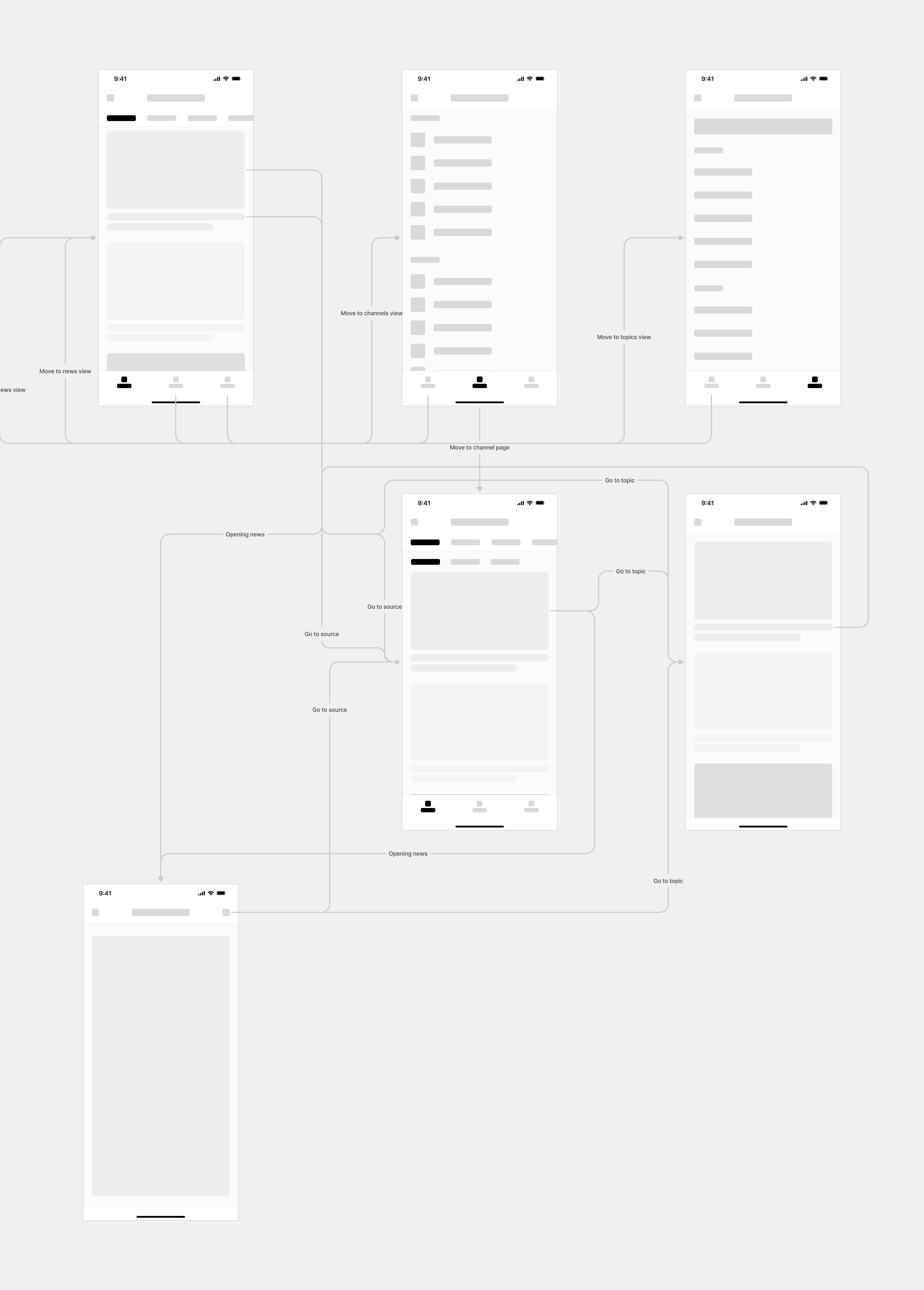
Unmapped publisher tags automatically route to catch-all sections to prevent information loss without corrupting main navigation hierarchies. When users relaunch the application non-explicitly, automated background synchronization updates feed states silently. If fresh articles exist, the system updates content seamlessly; if no updates occur, contextual feedback confirms that the feed remains fully up-to-date.
Ergonomic Touch Layouts and Discovery
The visual presentation layer optimizes touch ergonomics, visual hierarchy, and search efficiency to support seamless scanning across dense news lists. Positioned intentionally to align with natural reading patterns, card components reduce cognitive friction, while flexible search utilities minimize physical input effort by prioritizing recent queries and favorited category shortlists directly within the primary interaction flow.
Asymmetrical Card Component Ergonomics
Card containers utilize strategic element placement to maintain balance across varying headline lengths and asset availability. Contextual action triggers sit in the top-left corner to maximize thumb reachability while safeguarding reading areas against unintentional taps. Secondary metadata rests subtler at card bases, ensuring missing publisher badges never disrupt visual alignment or component symmetry.

Accelerated Cross-Navigation Frameworks
To streamline cross-navigation, the interface integrates a dual-path discovery engine combining custom tag favoriting with capped recent query histories. Recent search lists are constrained to screen-size limits to ensure scrolling remains faster than typing. Query algorithms evaluate string indices sequentially, prioritizing exact recency matches to minimize physical keyboard interactions.



Verifying Pipeline Bounds and Efficiency
Rigorous system evaluations validated the performance improvements achieved by isolating URL indexing from live asset rendering. Storing lightweight web address pointers reduced local memory consumption by over eighty percent compared to traditional full-text caching methods. Pre-indexed link pipelines achieved sub-hundred-millisecond interface load times, deferring heavy asset downloads until the user initiates an active article view.
Quantitative Memory Footprint Reductions
Benchmarking confirmed that the URL-indexed architecture eliminated database bloat while maintaining instant screen population during app launches. Network payload sizes decreased significantly because client devices only pull raw metadata during background syncing. Real-time web view rendering successfully offloaded media parsing to active viewing states without compromising initial scroll smoothness.
Zero-Loss Fallback Handling Validation
Usability testing confirmed that automated background synchronization eliminated user friction associated with manual refresh requirements. The fallback taxonomy routing structure successfully captured all unmapped publisher tags, ensuring complete content coverage without corrupting core feed hierarchies. Together, these technical benchmarks demonstrate a highly resilient architecture.




Strategic Tradeoffs and Scalability Roadmap
This initiative underscores the necessity of aligning underlying technical architecture with real-world user behavior. Decoupling data ingestion from visual presentation, implementing strict storage pruning rules, and engineering non-explicit background feeds yielded a highly responsive news hub. The resulting system balances client hardware constraints with an effortless, distraction-free reading experience for regional news consumers.
Lightweight Pointers versus Offline Access
Adopting a URL-pointer model required sacrificing offline full-text reading capabilities in favor of ultra-lightweight storage and instant feed population. While offline availability remains limited, this tradeoff directly aligns with the primary platform objective: providing instantaneous access to live, rapidly evolving regional news updates without exhausting local device memory.
Automated ML Classification Milestones
Future platform iterations will focus on replacing manual taxonomy mapping with automated machine-learning classification models. Additionally, upcoming updates will introduce enhanced payload parsing to eliminate external reader dependencies altogether. Expanding these capabilities will further strengthen real-time aggregation across non-standardized publishing environments.
Author
Kanan
Published
Last update
Version
2.0
Project ID
002
Status
Live
Language
English
Copyright
©2024-2026
