
Product
Foreshow Web Platform
Company
Cue Labs
Vertical
Digital Media
Stage
Concept Pitch
Type
Knowledge Management
Objective
Experience Architecture
Practice
Research / Design / Exploration
Delivery
UX / Interaction / Handoff
Role
User Experience Designer
Timeline
~ 4 M
Location
Baku, Azerbaijan / Remote
Relation
Founded
Conquering the Information Catastrophe and Endless Search Fatigue
Finding media in contemporary digital environments has grown increasingly burdensome as the sheer volume of available video content expands exponentially. Viewers navigate an overwhelming landscape of streaming services, frequently suffering from severe decision fatigue and wasting valuable leisure hours simply trying to choose what to watch. Without centralized curation, audiences find themselves trapped in an endless loop of jumping between disconnected applications and struggling to identify reliable recommendations.
Foreshow was conceived as a dedicated digital ecosystem specifically designed to solve this content discovery crisis. By functioning as an indispensable bridge between viewers and fragmented entertainment providers, the platform dramatically reduces search friction. Through intelligent curation and streamlined navigation tools, it transforms the frustrating routine of finding something to watch into an efficient, personalized, and enjoyable experience.
Uncovering Industry Shortcomings Through Rigorous Generative Research
Establishing a solid product foundation required deep investigative work into how people actually discover movies and television shows. The generative research phase deployed three distinct methodologies: an exhaustive competitor analysis of industry giants like IMDb, JustWatch, and Reelgood; four in-depth remote one-on-one user interviews; and an exploration of external data sources including Google research reports and search trends.
This multi-faceted investigation revealed critical systemic gaps in existing market solutions that directly shaped the product strategy. The findings demonstrated that users desperately crave trusted ratings, standardized review mechanisms, and centralized content availability. Furthermore, research proved that audiences heavily rely on official trailers and peer influence when making final viewing decisions, making visual content presentation paramount to success.
Generative Research
I conducted 3 different methods for generative research, in the order of Competitor analysis, User interviews, Trend analysis.
Competitor analysis
The reason behind competitor analysis was to understand
How our direct competitor solve the problem?
How our indirect competitors solve the problem?
What are the responses of their customers?
What unmet problems do their customers have?
What are they good at?
What features make them unique?
How they price their services?
The three competitors I analyzed were: IMDb, JustWatch, and Reelgood. Here are the insights:
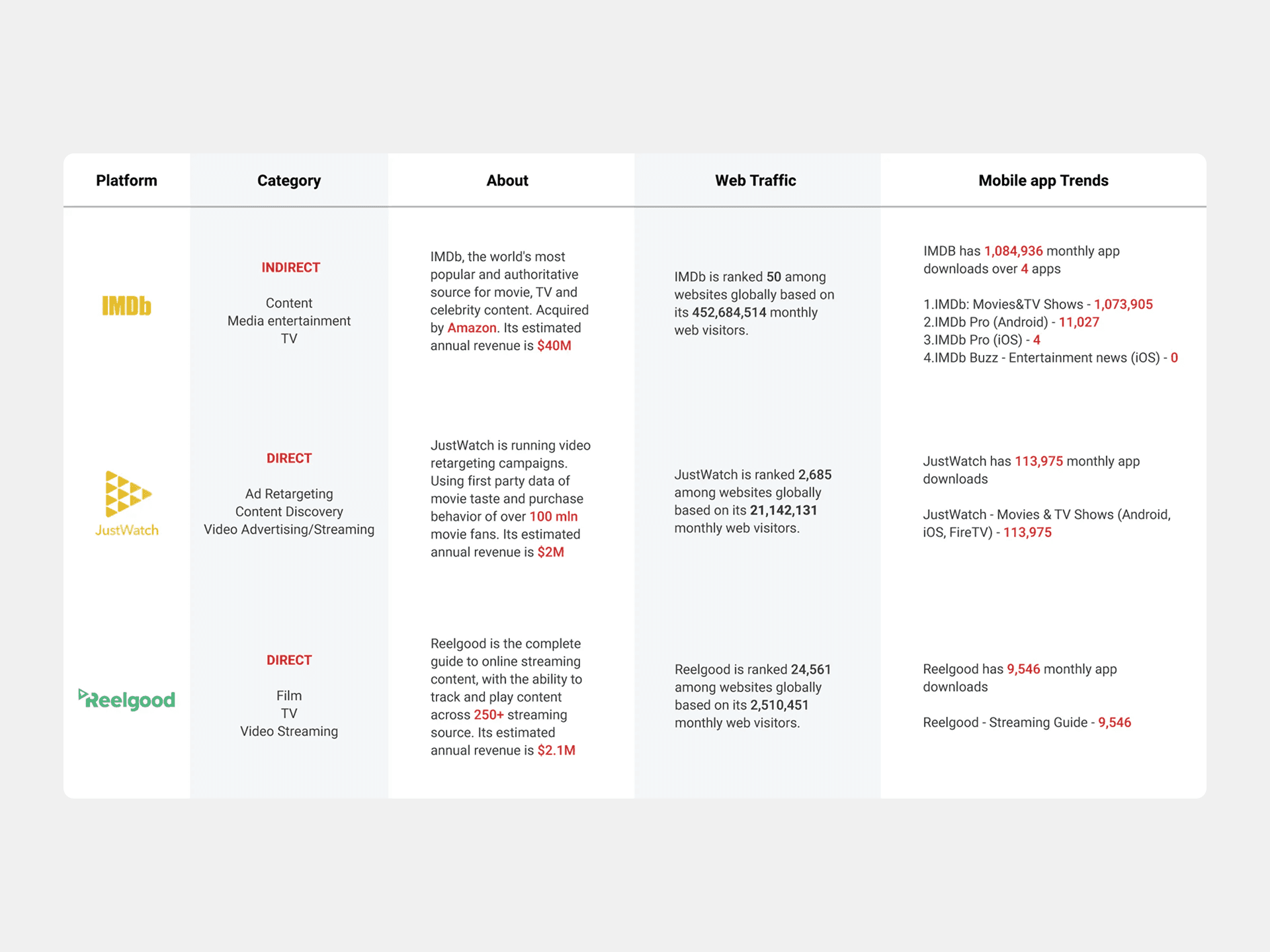

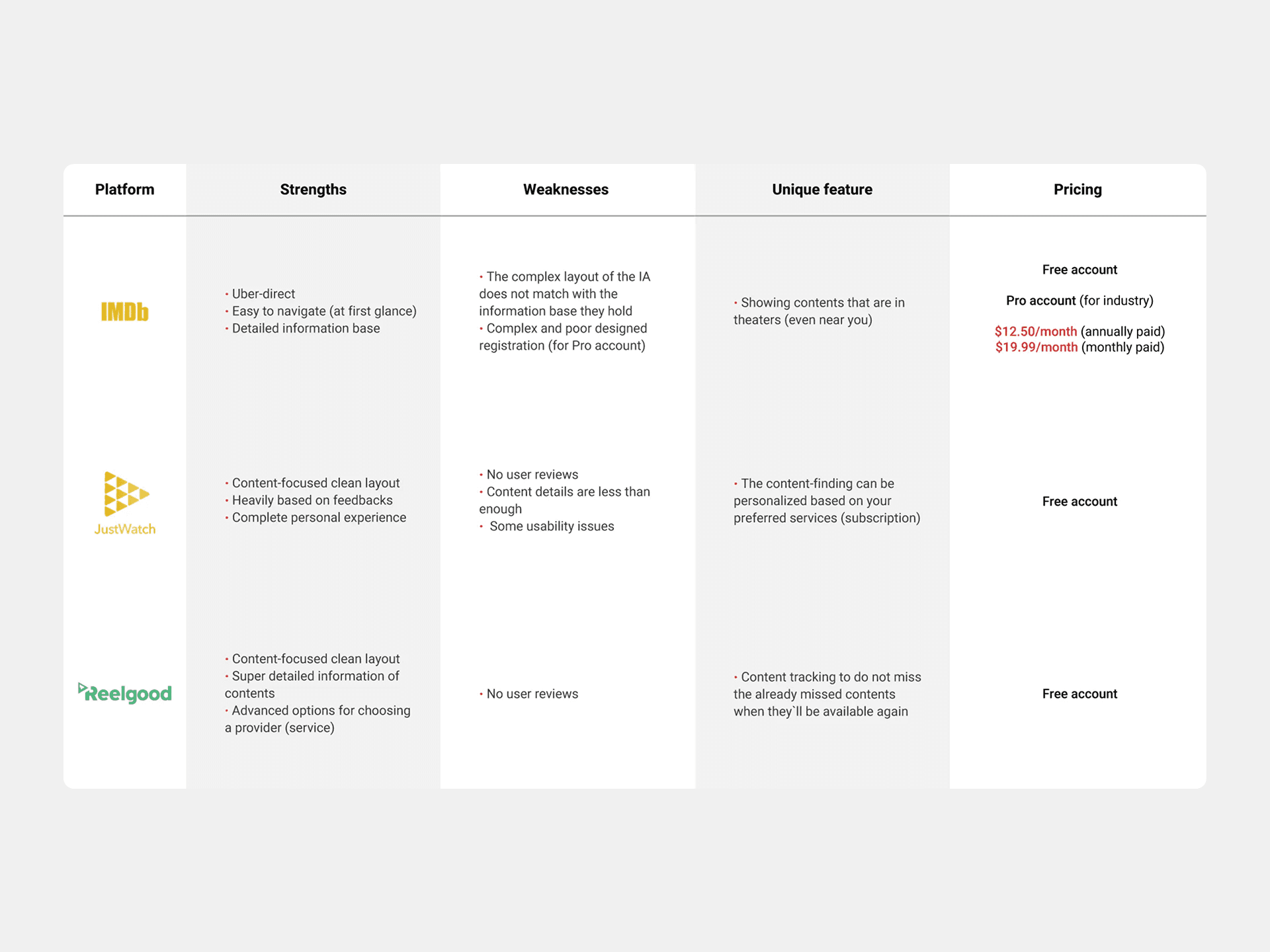
While conducting competitor analysis I dug into customer reviews of these platforms to better understood the challenges they faced during the process which I also wanted to ease. Between a myriad of thoughts of people, I chose the ones that could help me to pick the right path while building a new product. Here are the takeaways — quotes from that process:

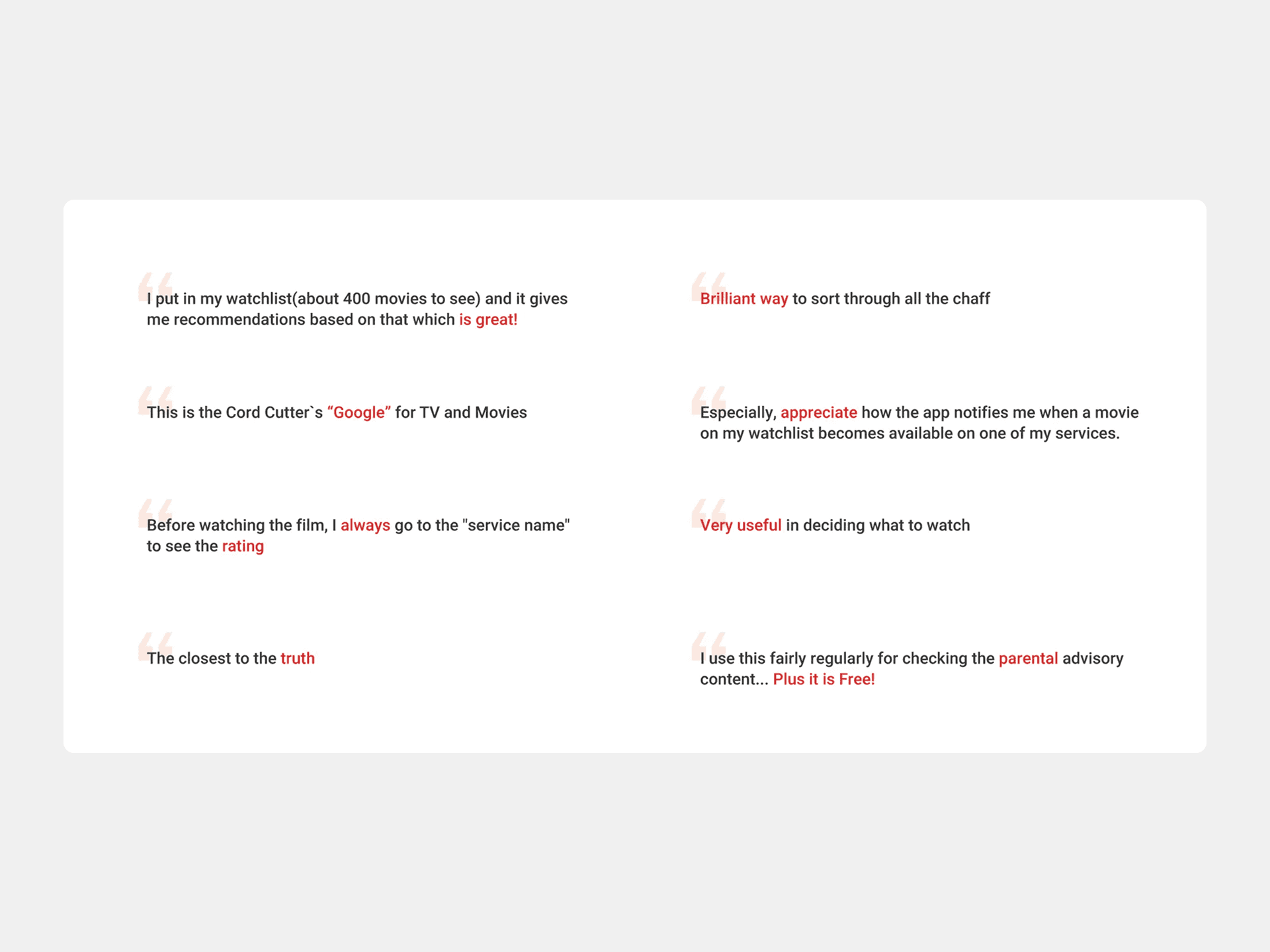
Competitor analysis was the initial building block of the generative research as well as the product roadmap. That process gave me the ideas that were not understandable by guessing or assuming. The insights it brought me taught me the importance of initial (generative) research once again. At the end of competitor analysis I came up with the following insights or ideas:
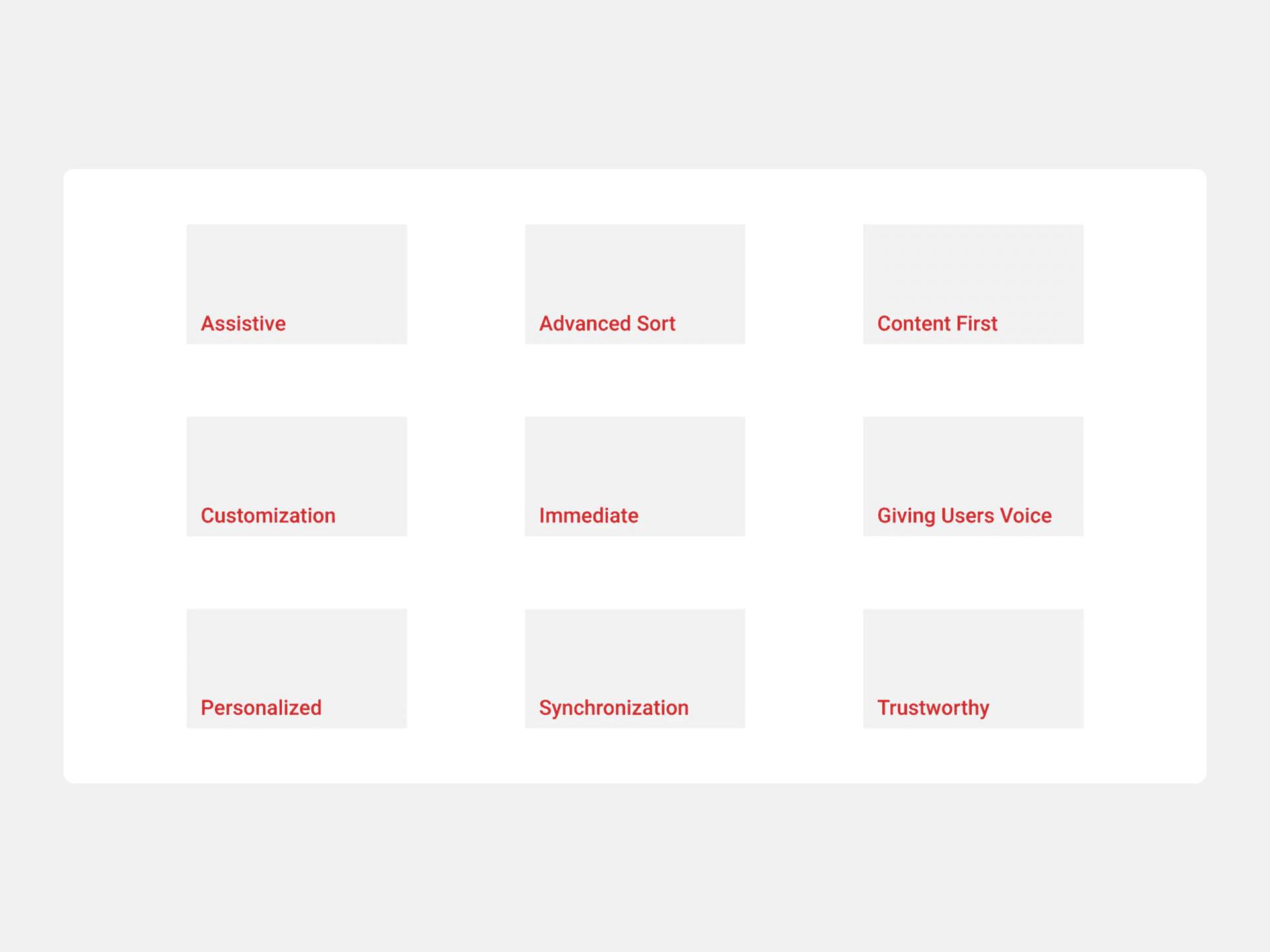
1. Customers look for trust: Saving the time by reducing the search process of content-finding is what they are looking for, but the poor or subjective recommendations and ratings result in customer loss.
2. People strive for reviews: Ratings and reviews either authoritative or consensus have a great impact on the decision-making process. Besides being a motivation and a trigger for our mimic structure, these data are handy when customers are uncertain.
3. Content First: It does not matter how useful, usable and even aesthetic a product is if the customers can not find relevant, current or appropriate content.
4. Customers want to be heard: Customers need a voice to be heard, to get help and to help others.
5. Synchronization saves time: Products that can not keep the data through the devices or updates lose repetition.
Interviews
Competitor analysis results raised the new questions to be answered and guided me to do one-on-one interviews. There were some key points had to be clarified with the real people and they were:
How people find the content to watch?
Do they use any shortcuts to ease the process?
What metrics affect their decisions most?
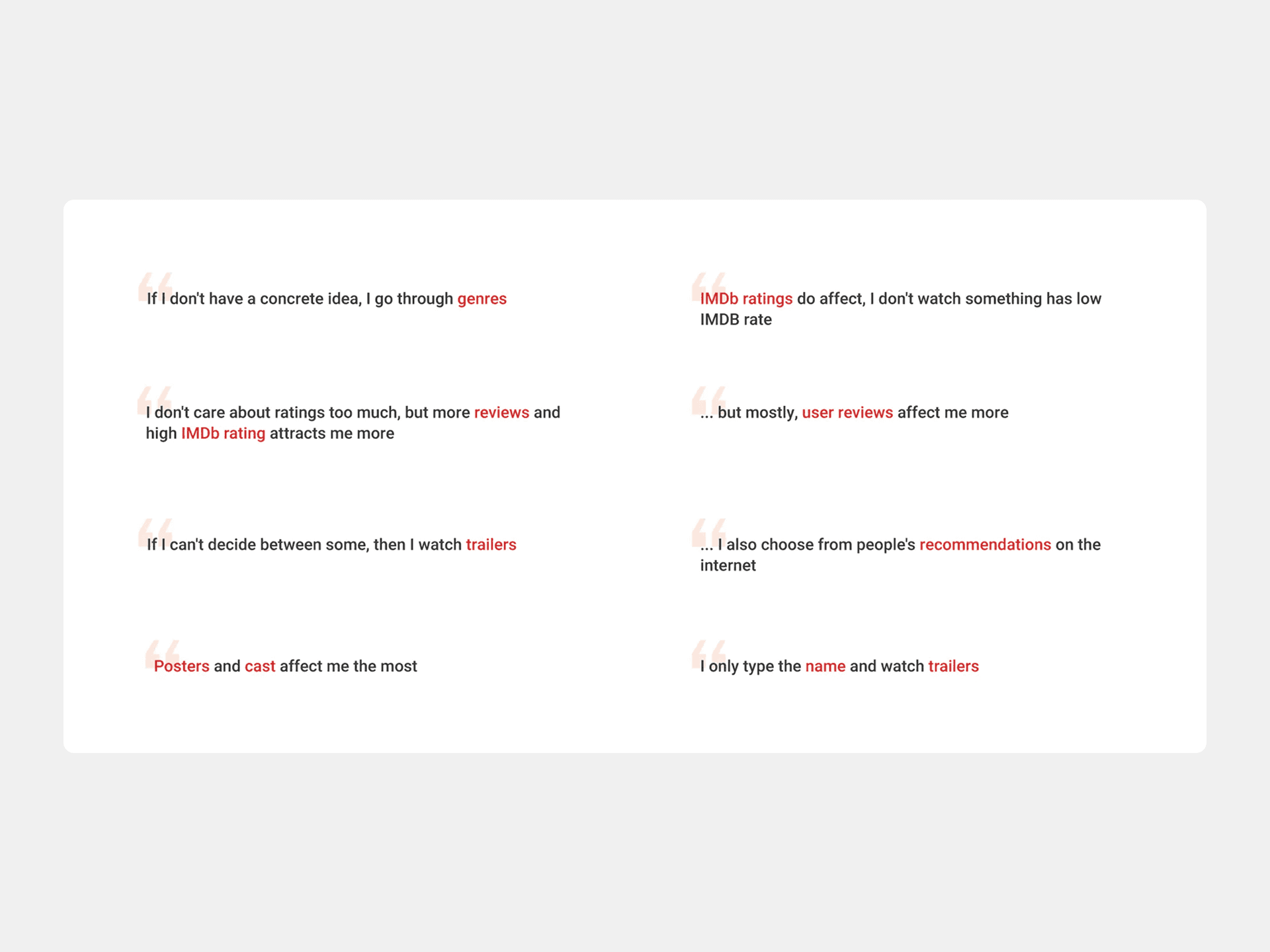
I conducted 4 remote one-on-one interviews with the persons who were eligible to participate according to the target customer base (which were those of competitors at that point). Here are the quotes that I found valuable and extracted from interviews:
Google Report
Google has a research report — Behind the Box Office: What Influences the Films We See on the behavior of people on choosing content to watch, the process of content finding and metrics that affect their decisions. Since that report was tailored to my process and conducted by the company of the huge customer numbers I used it to get more information. Here are the insights from that report:
1. On the web, Trailers lead: 4 out of 5 of moviegoers use video sites to look for more information about a film.
2. Influencers: The official movie trailer influences people`s decisions 3 times more than any other source.

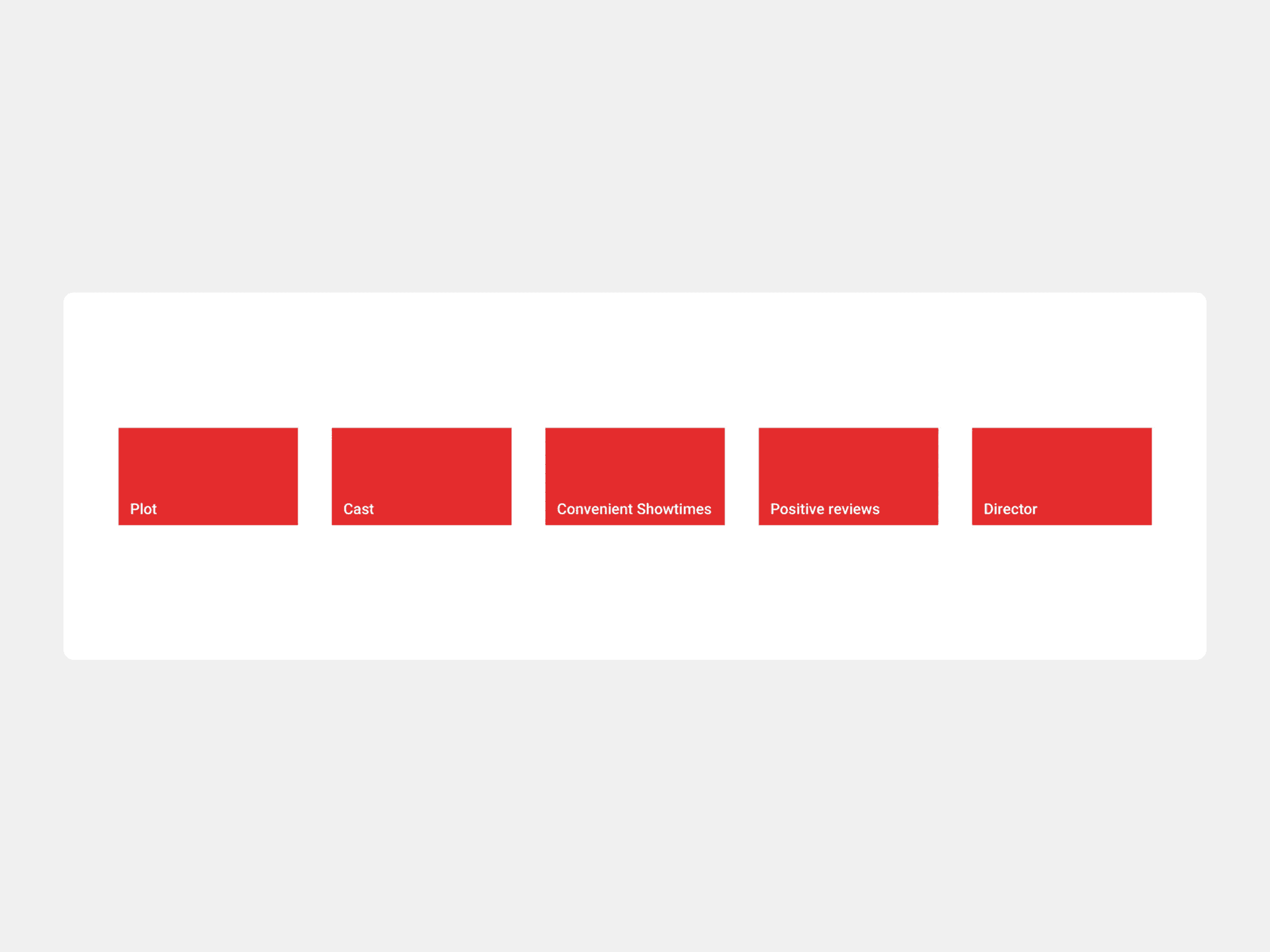
3. What information people are looking for
Google Trends
For the last step on generative research, I wanted to understand searching and finding patterns of the people about movies and series/TV shows. So, I explored Google Trends. Here are the insights:

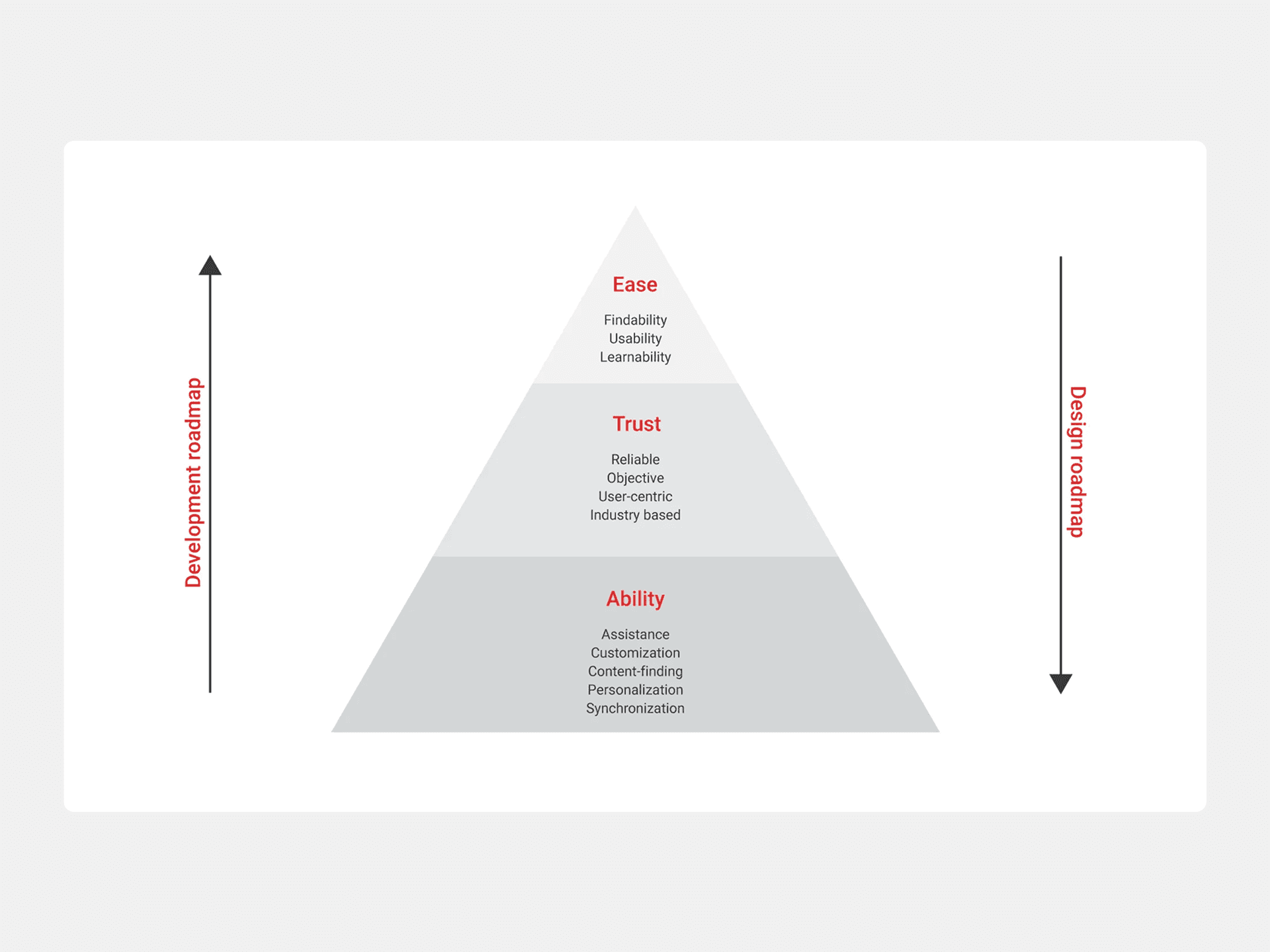
Formulating Product Vision and Strategic Hierarchy Principles
Translating raw research insights into actionable product direction required establishing strict strategic guidelines and a defined hierarchy of user needs. Inspired by psychological frameworks, the product vision prioritized foundational utility above all else, ensuring that core content delivery and search efficiency superseded superficial interface embellishments. The primary north star was simple: if a media platform cannot help a user quickly find relevant content, no amount of aesthetic polish can save it.
This strategic alignment kept the conceptual design focused entirely on solving real human problems rather than chasing feature bloat. By establishing clear product principles early, every subsequent design decision—from initial landing page layout to complex tracking features—remained firmly anchored in verified audience behaviors and expectations.
Mapping User Workflows and Eliminating Navigation Friction
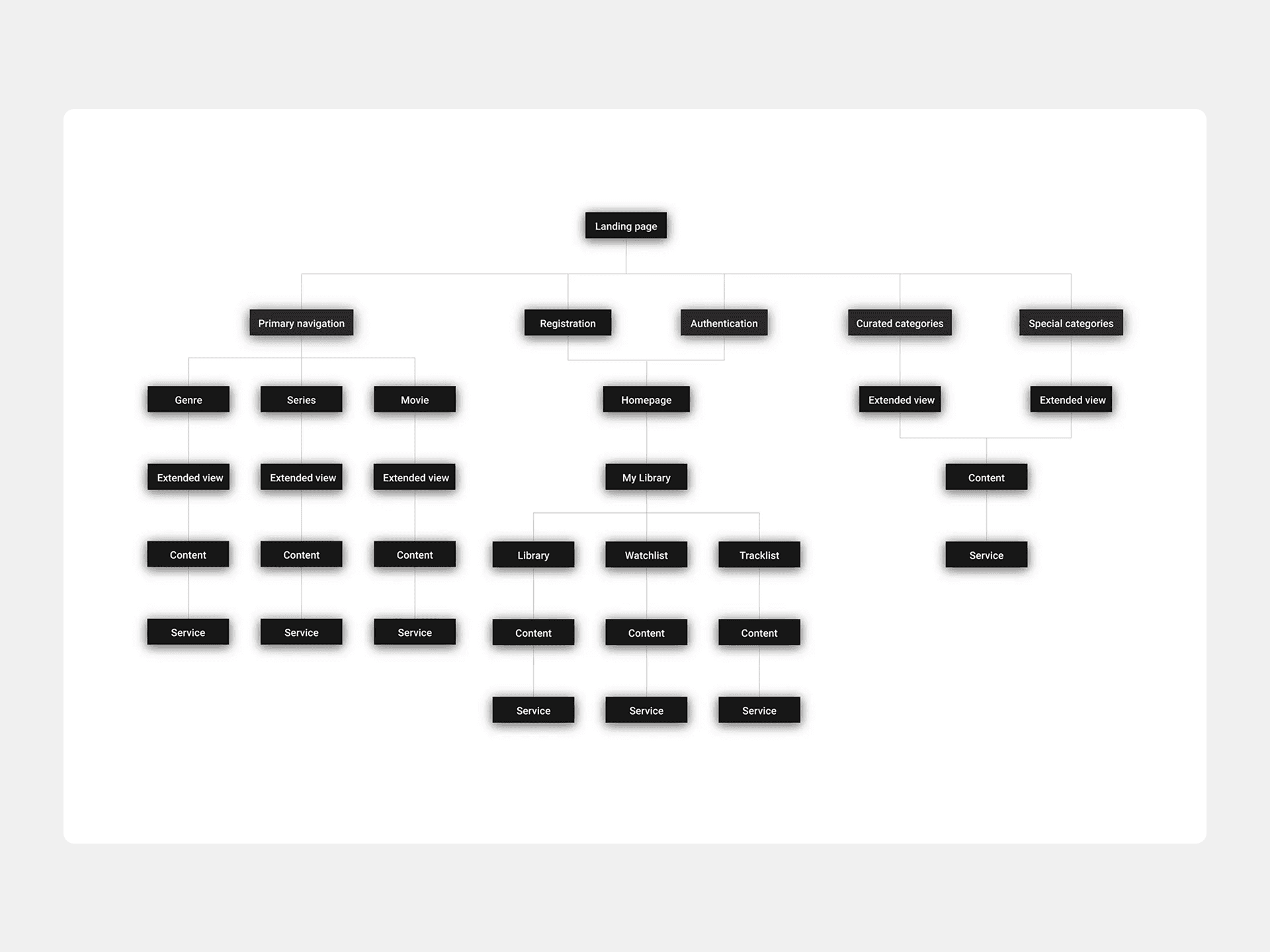
Analyzing how users interact with media directories highlighted the urgent need to minimize every single step between opening the app and selecting content. The navigation architecture was engineered around a strict "Content First" mandate, stripping away corporate fluff and placing immediate media options front and center. By studying qualitative feedback from user interviews, the design successfully addressed the core psychological barriers that cause viewers to abandon traditional streaming directories in frustration.
Simplifying the Initial Landing Experience
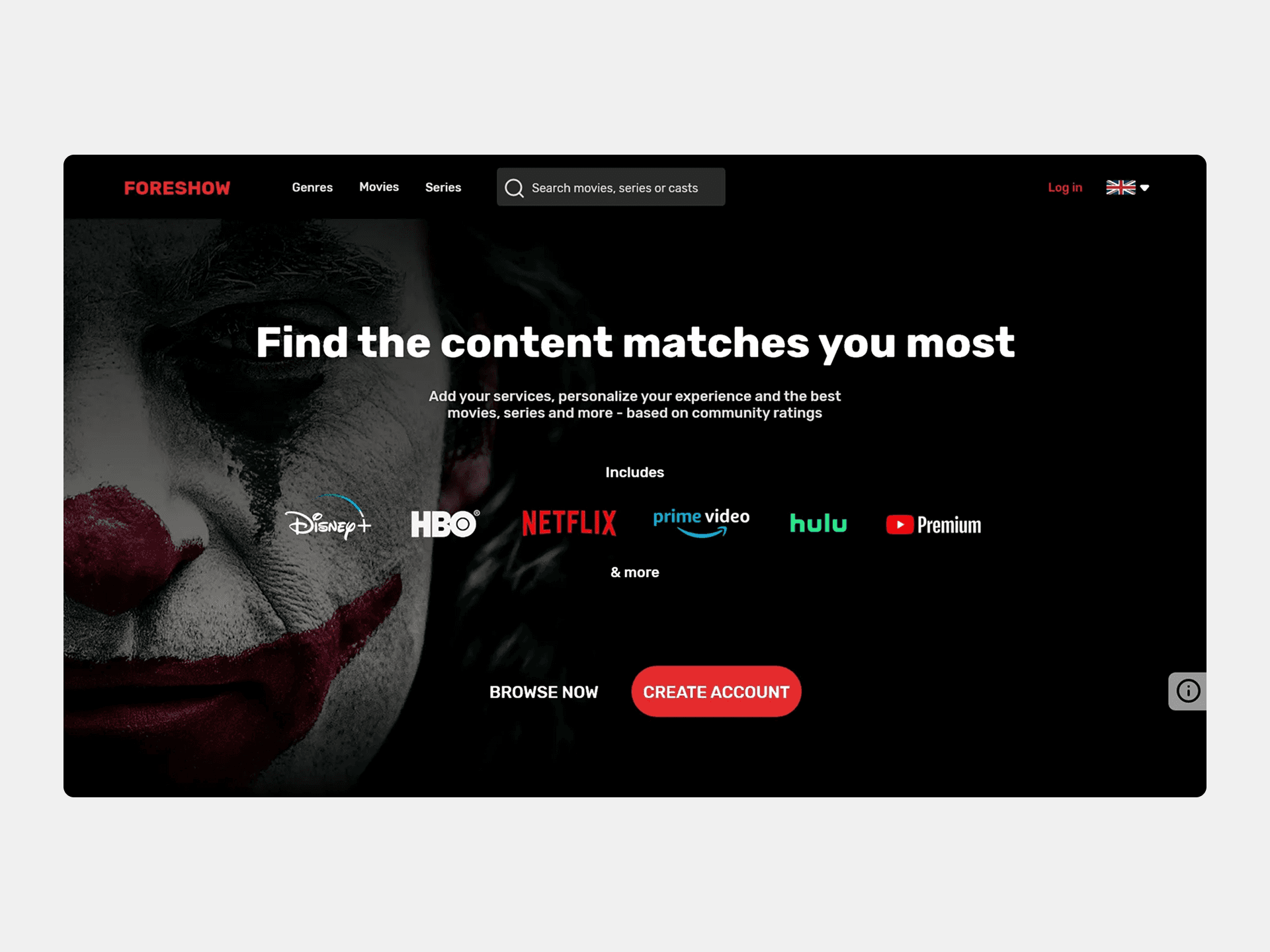
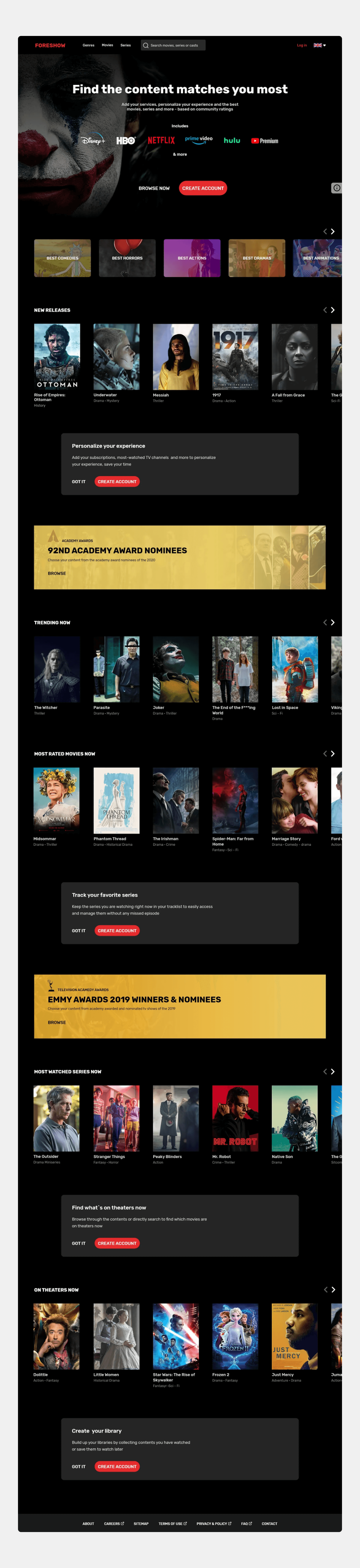
The landing page replaces boastful company messaging with direct user-centric copy, allowing visitors to immediately grasp platform utility and select their active streaming subscriptions.
Streamlining Action Controls on Content Cards
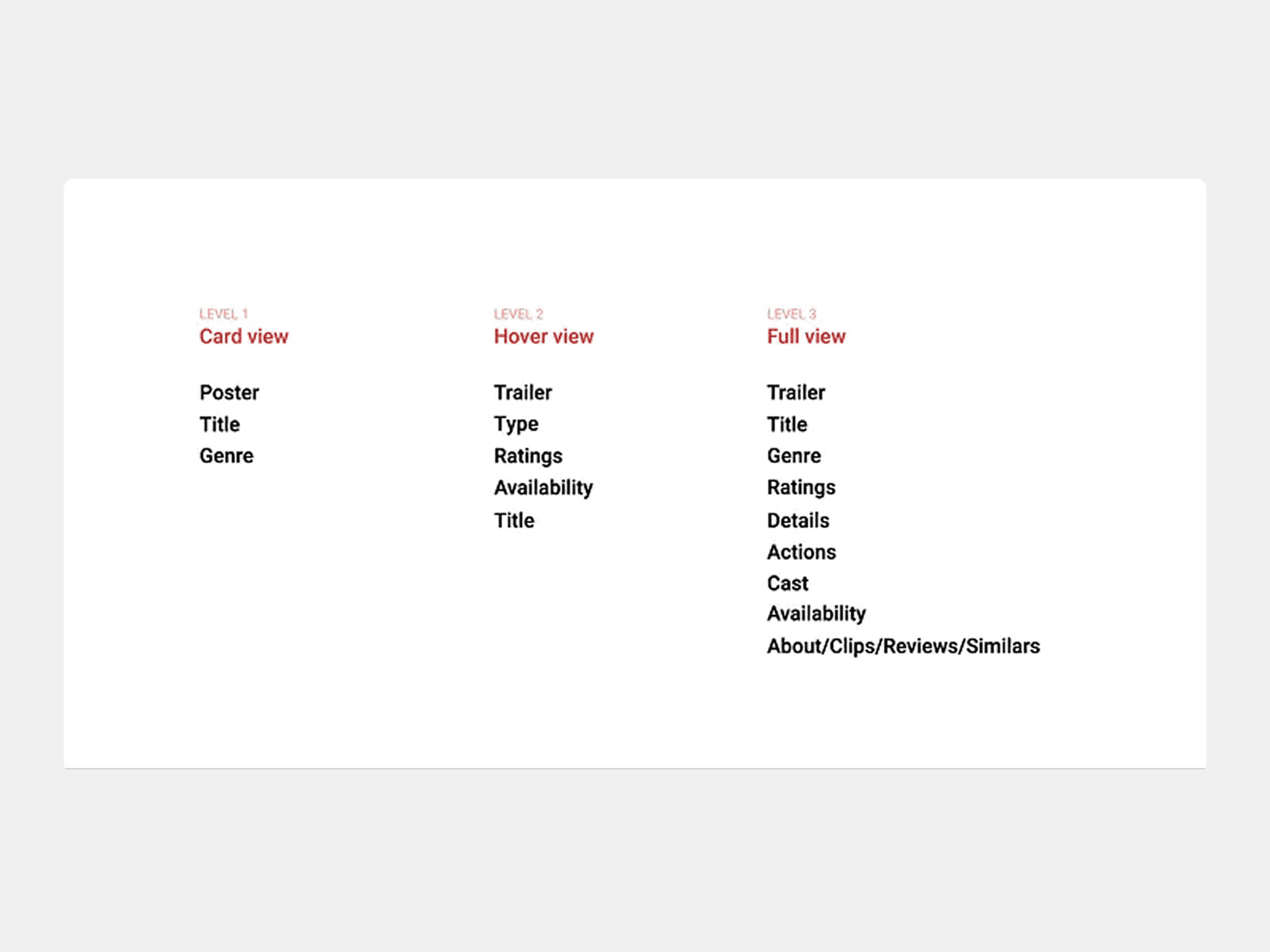
Extended hover menus provide instant, low-friction paths for users to mark content as watched, add items to watchlists, or dismiss irrelevant recommendations.
Architecting Anticipatory Design, Personalization, and Tracking Mechanics
The core functionality of the platform relies on sophisticated personalization features designed to anticipate user intent before they explicitly search for content. By utilizing aesthetic visual analysis inspired by modern streaming pioneers, content posters feature cinematic shots from the actual media rather than generic promotional art, heavily influencing positive user engagement.
Active Service Filtering: Users can input their specific streaming subscriptions, automatically tailoring recommendations and availability chips exclusively to accessible providers.
Digital Library Creation: Modeled after collecting physical home media, users can archive all previously watched films into a personal library for easy retrospective sorting.
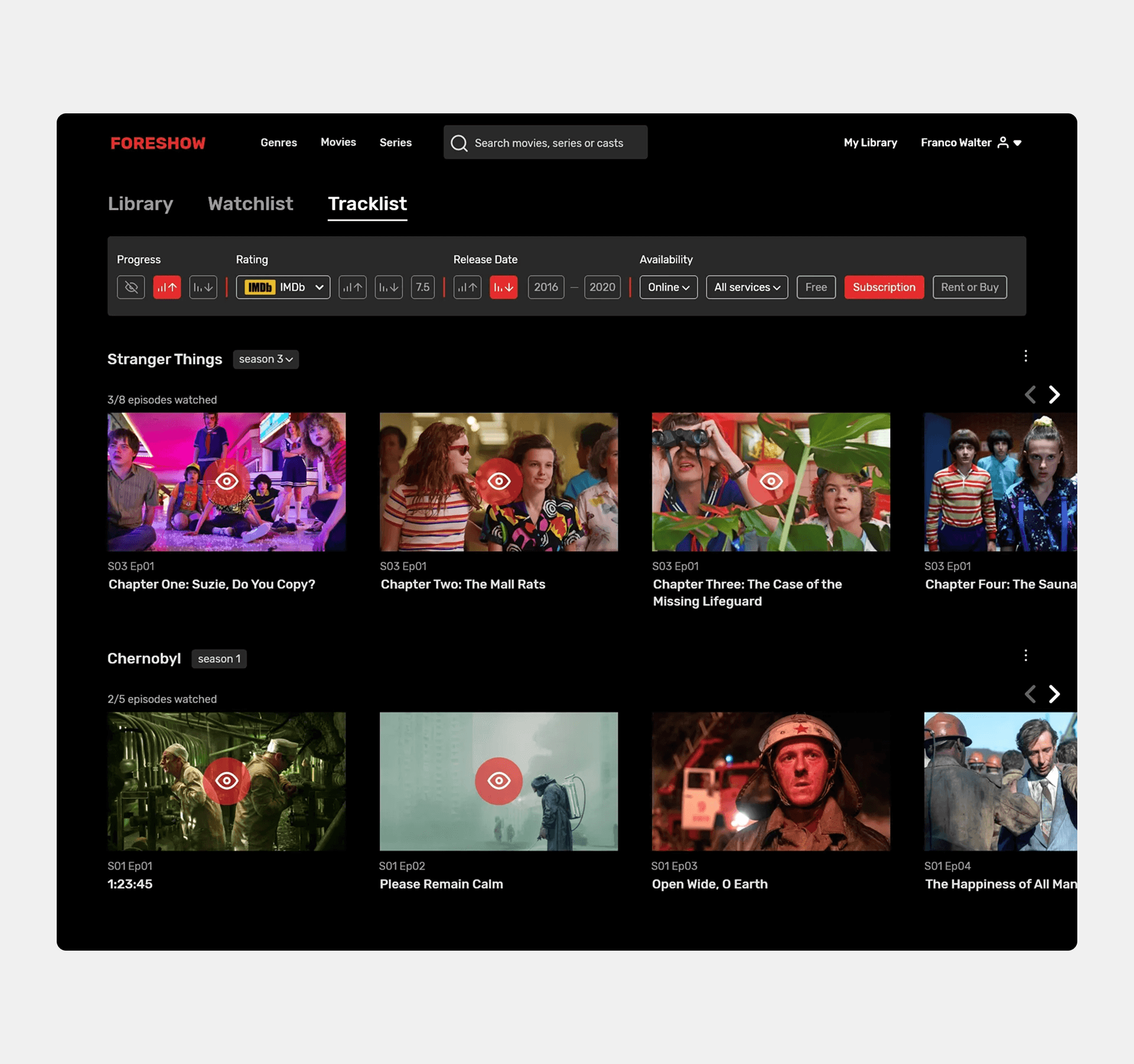
Series Tracklist Management: Dedicated tracking tools allow television enthusiasts to monitor exact episode progression across ongoing series without losing track of their viewing status.

Onboarding and Subscription Integration
Custom onboarding flows capture preferred streaming services instantly, tailoring the home feed to eliminate unavailable options from the user's view.
Curated Watchlist Architecture
Users can compile customized queues of discovered content, establishing a centralized repository for future viewing without juggling multiple app bookmarks.
Community Reviews and Direct Availability
Content pages feature prominent community review sections and instant streaming link chips that route users directly to the hosting provider in one tap.


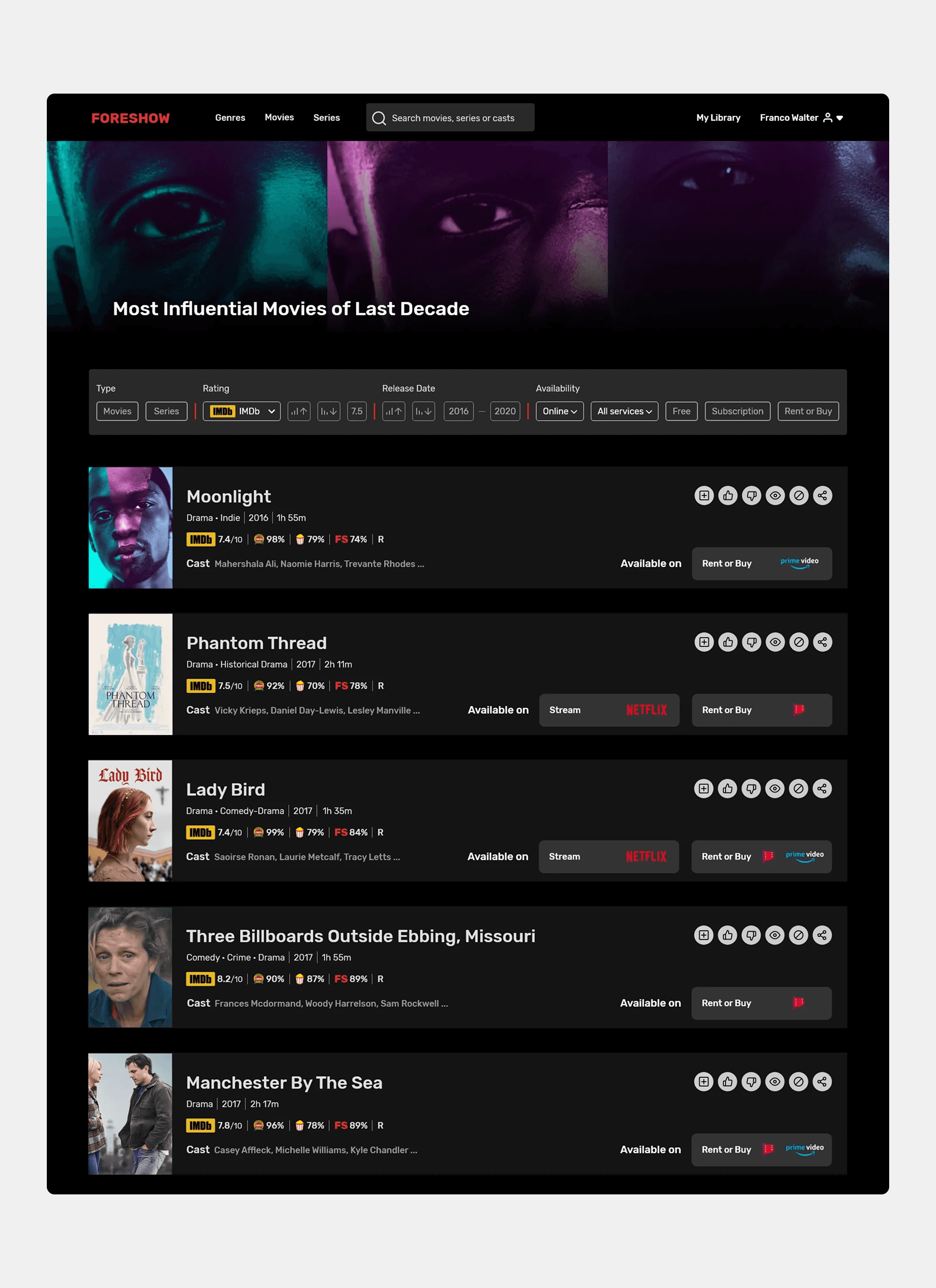
Verifying Usability Through Remote Testing and Iterative Refinement
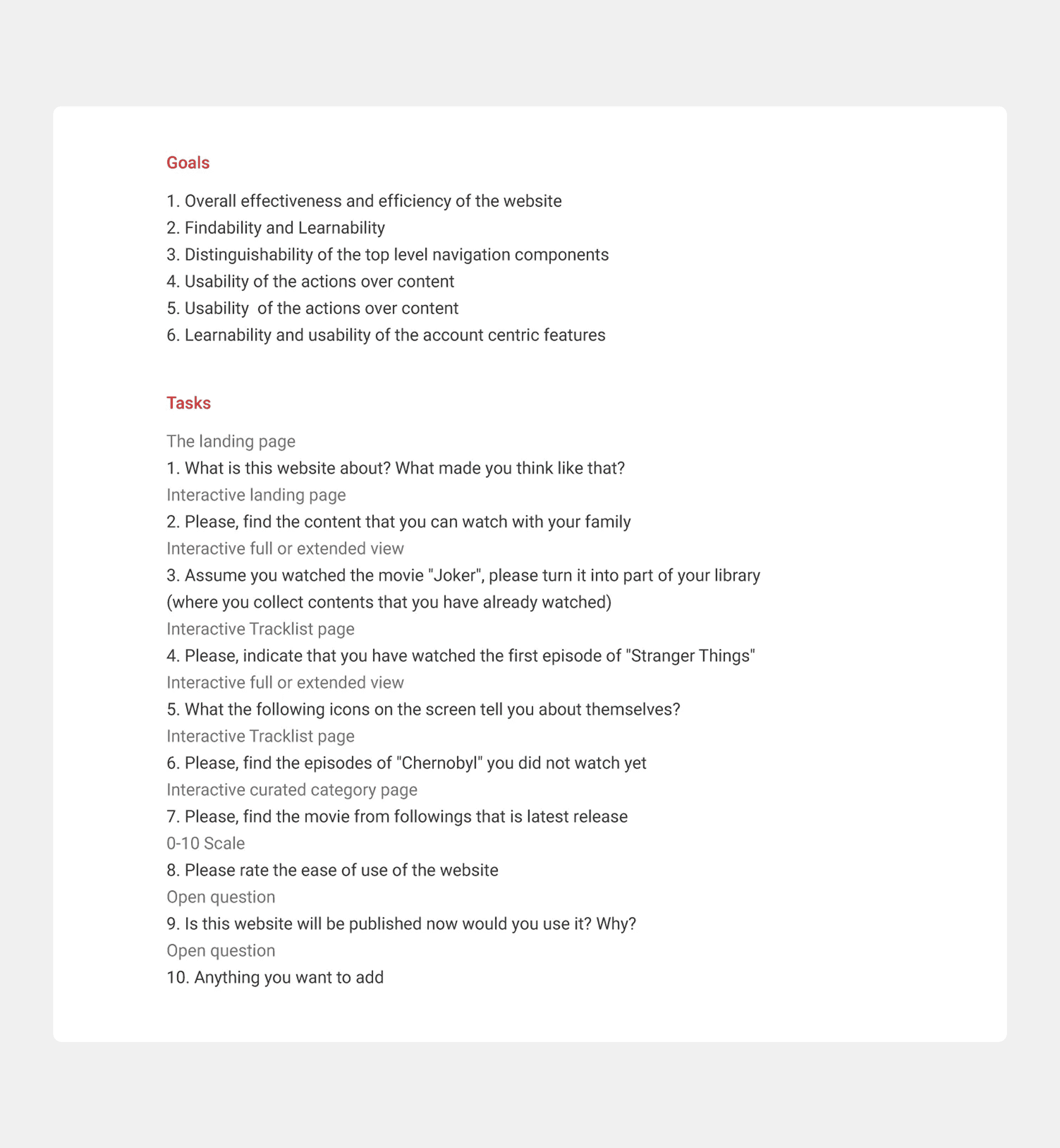
Validating the initial high-fidelity prototype required conducting a comprehensive usability study using Maze, featuring fifteen participants who executed a structured task script across the web interface. Although platform-side data tracking issues caused some information loss during the sessions, the qualitative insights gathered from user behavior proved invaluable for identifying hidden interaction flaws. Observing real participants attempt to navigate the platform highlighted exact friction points that would have remained invisible through internal observation alone.
During the evaluation, specific tasks revealed critical user confusion regarding interactive elements and layout hierarchies. For instance, participants frequently attempted to click on the streaming service icons displayed above the fold on the landing page, mistaking them for direct links to content rather than static trust badges. Additionally, certain action triggers related to watchlist and tracklist additions generated unintended misclicks due to overlapping touch targets. These qualitative findings provided the precise diagnostic clarity needed to execute immediate, targeted interface revisions before finalizing the project design.
Evaluation Area | Target Operational Metric | Defined Standard | Status Verification |
Core Navigation | Discoverability of Main Features | Intuitive User Flow | Verified via Maze |
Action Execution | Watchlist and Tracklist Taps | Low Error Rate | Revised Post-Test |
Service Filtering | Subscription Customization | Clear Visual Feedback | Verified via Testing |
Interface Clarity | Element Recognition Accuracy | Immediate Understanding | Revised Post-Test |
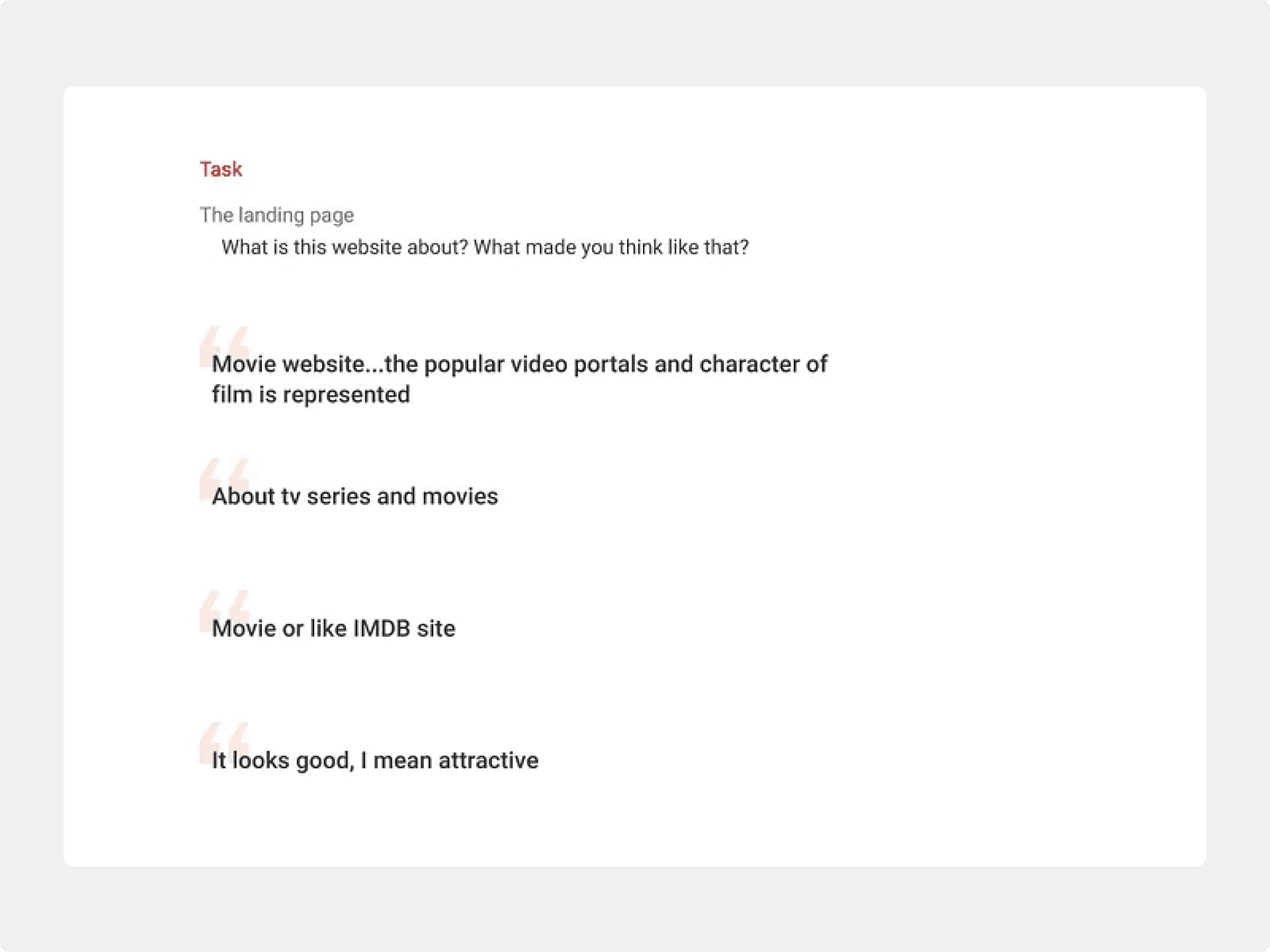
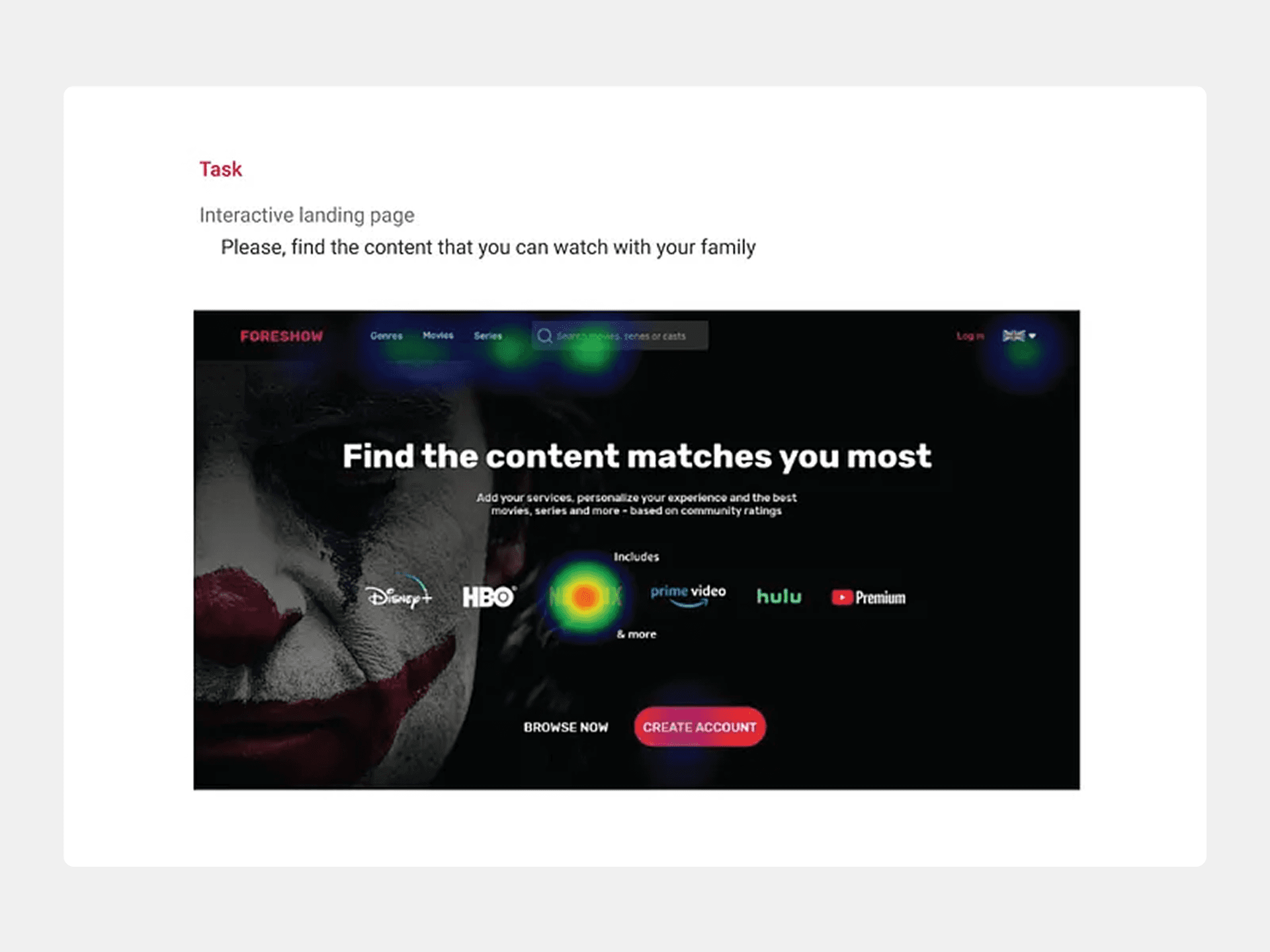
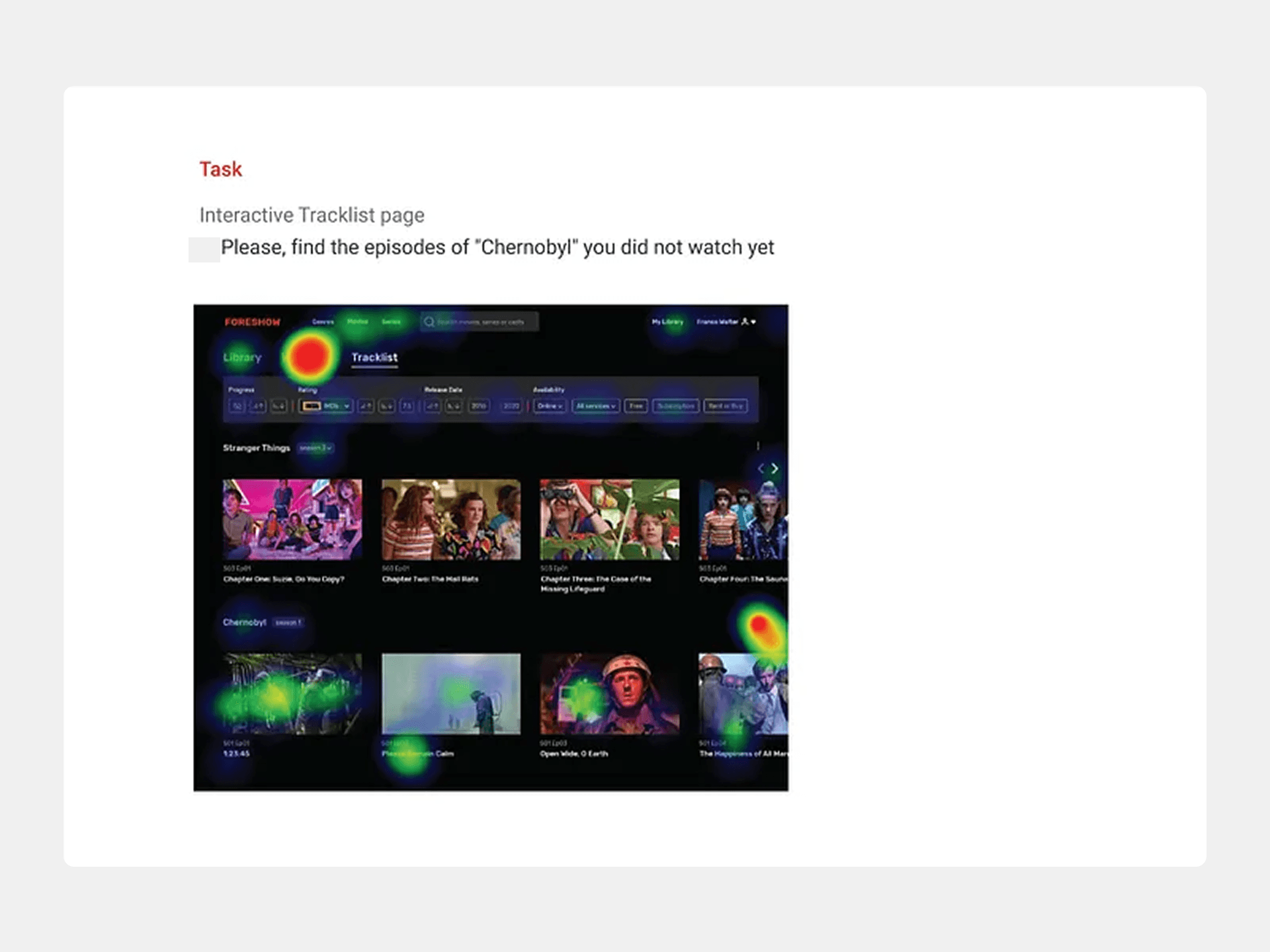


After conducting a usability test there were 2 things to be changed
The images of the services on the “Above the fold” of the landing page converted to the link to the content from that particular service. Because during the test that images were considered to be interactive elements.
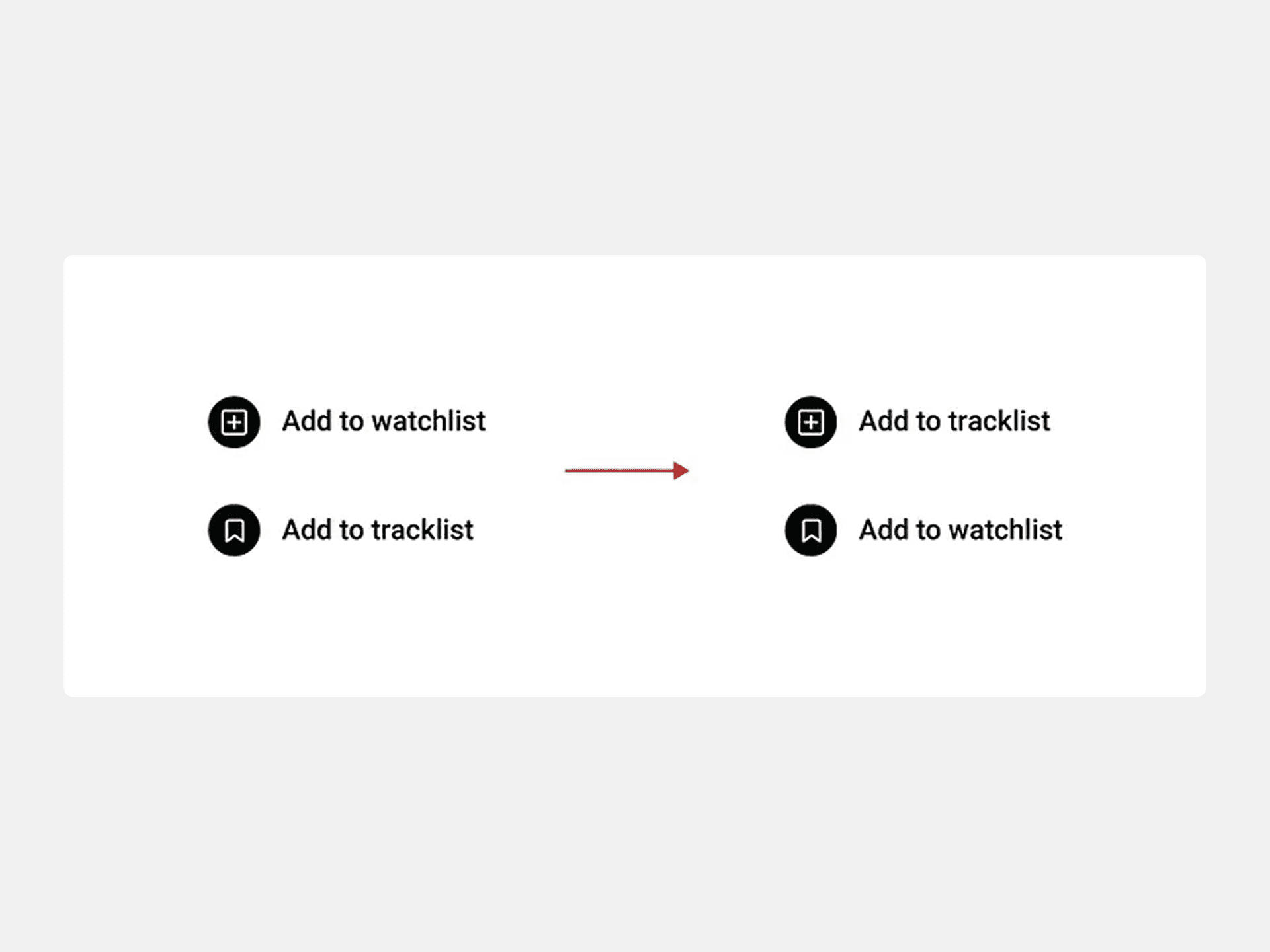
“Add to watchlist”, “Add to tracklist” were changed. Because they caused misclicks.
Transforming Discovered Insights Into Concrete Product Improvements
The usability testing phase directly drove crucial refinements that elevated the overall quality of the interface before final project completion. Based on participant behavior during test tasks, service icons on the landing page were successfully converted into direct content links to eliminate confusion, and conflicting watchlist action triggers were redesigned. These targeted adjustments proved the immense value of early user testing, transforming abstract design assumptions into a polished, intuitive user experience.
Integrating these modifications ensured that the final digital concept successfully bridged the gap between raw generative research and practical interface design. The resulting ecosystem provides a cohesive, frustration-free environment that empowers everyday viewers to master their entertainment choices with absolute confidence and minimal wasted time.
Defining Future Evolution and Long-Term Product Scalability
As a conceptual one-month project, Foreshow established a robust foundational framework while leaving clear pathways for future expansion and advanced technical integration. Subsequent development phases could introduce deep API synchronization with major streaming providers to automate watchlist tracking, alongside premium subscription tiers like "Foreshow Plus" featuring advanced filtering options such as director-based searching.
Ultimately, this comprehensive design journey demonstrated that solving complex digital problems requires unwavering adherence to empirical user research over mere intuition. By continuously refining its anticipatory design engine and maintaining strict focus on user needs, the platform stands ready to evolve into an indispensable tool for modern media consumers everywhere.
Author
Kanan
Published
Last update
Version
3.1
Project ID
004
Status
Live
Language
English
Copyright
©2022-2026
